ADI

How to Become a Driving Instructor: The Qualifications You Need

If you enjoy driving and like helping others learn, becoming a driving instructor could be a rewarding career. But what qualifications do you need to become a driving instructor?

Rhys Taylor
Rhys TaylorOctober 5, 2026 · 8 min read
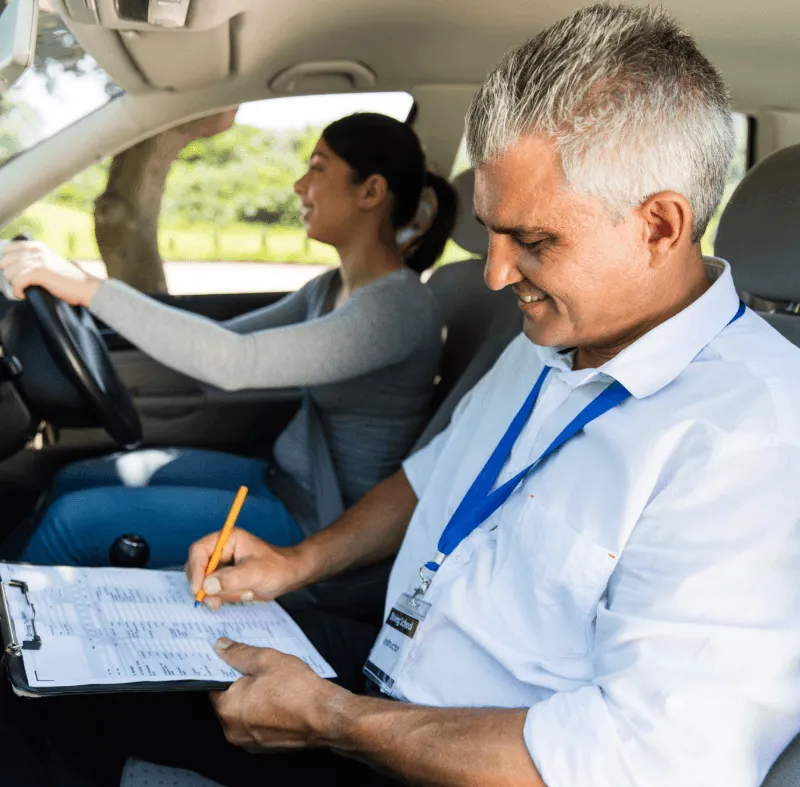
A driving instructor holding a clipboard reviews a form with a student driver seated behind the steering wheel inside a car.

In the UK, you must qualify as an Approved Driving Instructor (ADI) if you want to charge people for car driving lessons. You do not need a university degree or a separate teaching qualification. Instead, you must meet the DVSA's eligibility requirements and pass three ADI qualifying tests.

How to become a driving instructor: step by step

To become an ADI in England, Scotland or Wales, you work through these steps in order:

  • 1. Check you're eligible:: 

    You must be 21 or over, have held a full car driving licence for at least 3 years and not have been banned from driving in the last 4 years.

  • 2. Apply to the DVSA:: 

    Start your application on GOV.UK. You'll need a new DBS (criminal record) check, even if you already have one.

  • 3. Find a trainer:: 

    The DVSA recommends using a registered trainer to prepare for the three qualifying tests.

  • 4. Pass ADI Part 1:: 

    The theory and hazard perception test.

  • 5. Pass ADI Part 2:: 

    The driving ability test.

  • 6. Get teaching experience:: 

    You can apply for a 6-month trainee licence so you can be paid for lessons while you prepare for Part 3.

  • 7. Pass ADI Part 3:: 

    The instructional ability test.

  • 8. Register as an ADI:: 

    Apply for your first ADI badge within 12 months of passing Part 3.

You must pass Parts 2 and 3 within 2 years of passing Part 1, or you'll have to start the process again.

What qualifications do you need to become a driving instructor?

To become a qualified driving instructor, you need to:

  • Meet the DVSA's eligibility requirements

  • Complete a new DBS check

  • Pass the ADI Part 1 theory test

  • Pass the ADI Part 2 driving ability test

  • Pass the ADI Part 3 instructional ability test

  • Register as an ADI with the DVSA

You can choose to train with a registered driving instructor trainer to prepare for the tests. The DVSA recommends getting professional training, although the qualifying process itself is based on passing the three tests.

What are the requirements to become a driving instructor?

Before you start the ADI qualification process, you need to meet certain legal requirements.

You must:

  • Be 21 or over

  • Have held a full driving licence for at least three years

  • Have not been disqualified from driving during the last four years

  • Be considered a fit and proper person to become an ADI

  • Pass the required criminal record check

You also need to hold the correct licence for the type of vehicle you want to teach in.

There are additional rules around your driving history and suitability, so it is worth checking your eligibility with the DVSA before paying for training.

Do you need a teaching qualification to become a driving instructor?

No. You do not need a formal teaching qualification such as a teaching degree or PGCE to become a driving instructor.

Instead, the ADI Part 3 test assesses your ability to provide effective driving instruction.

This means you need more than strong driving skills. You must also learn how to identify a learner's needs, explain driving concepts clearly and adapt your teaching to help your pupil make progress.

A good driving instructor needs both driving knowledge and instructional skills.

Looking for instructor insurance?

We provide bespoke cover designed specifically for the unique needs of driving specialists.

Get a quote

What are the ADI qualifying tests?

The ADI qualification has three tests. You must take them in order.

ADI Part 1: Theory test

The first stage is the ADI Part 1 theory test.

It tests your knowledge of driving and instruction, along with your ability to identify developing hazards.

It has two parts: 100 multiple-choice questions in 90 minutes, where you need at least 85 overall and at least 20 out of 25 in each of the four categories, and a hazard perception test, where you need at least 57 out of 75. The test costs £81.

You must pass Part 1 before moving on to Part 2.

You have unlimited attempts at Part 1. However, once you pass it, you must complete the remaining stages within two years or restart the qualifying process.

ADI Part 2: Driving ability test

The second stage is the ADI Part 2 driving ability test.

This assesses whether your driving meets the required standard for an ADI.

The test takes around an hour and includes an eyesight check, vehicle safety questions, general driving, two reversing manoeuvres and about 20 minutes of independent driving. You pass if you make no more than 6 driving faults and no serious or dangerous faults. The test costs £111.

You have a maximum of three attempts to pass Part 2. You must pass it before you can move on to Part 3.

You also need a suitable vehicle for the test. For example, the vehicle must meet the DVSA's requirements and have appropriate insurance for an ADI Part 2 test.

ADI Part 3: Instructional ability test

The final stage is the ADI Part 3 instructional ability test.

This assesses your ability to teach a learner driver. You need to demonstrate that you can provide effective instruction and respond appropriately to the pupil's needs.

A DVSA examiner watches you give a lesson of about an hour to a real pupil. You're marked on 17 areas of competence across lesson planning, risk management, and teaching and learning strategies, with a total score out of 51. You need 31 or more to pass, and you'll automatically fail if you score 7 or less on risk management. The test costs £111.

You have three attempts to pass Part 3.

After passing Part 2, you can also apply for a six-month trainee driving instructor licence. This can give you practical teaching experience before you take Part 3.

How much does it cost to become a driving instructor?

The DVSA sets the fees for the qualifying tests and registration. As of November 2026, they are:

  • ADI Part 1 theory test:: 

    £81

  • ADI Part 2 driving ability test:: 

    £111

  • ADI Part 3 instructional ability test:: 

    £111

  • Trainee driving instructor licence (optional):: 

    £140

  • First ADI badge (registration):: 

    £300

That's £603 in DVSA fees if you pass each test first time without a trainee licence, or £743 with one. Retakes cost the full fee again. On top of this, you'll pay for your DBS check and any training, which varies by provider. Once you qualify, you renew your registration every 4 years, which currently costs £300.

ADI pass rates

The ADI tests are demanding, and Part 3 has the lowest pass rate. DVSA figures for April 2025 to March 2026 show:

  • ADI Part 1:: 

    37.0% of 31,081 tests passed

  • ADI Part 2:: 

    55.3% of 13,605 tests passed

  • ADI Part 3:: 

    27.8% of 13,606 tests passed

Thorough preparation and plenty of teaching practice before Part 3 can make a real difference, especially as you only get three attempts each at Parts 2 and 3.

Can you earn while you train? The trainee licence

After passing Part 2, you can apply for a trainee driving instructor licence, often called a pink badge. It lets you be paid for giving driving lessons while you prepare for Part 3. To get one:

  • You must have passed ADI Part 2 and be eligible to take Part 3

  • You must have done at least 40 hours of training with a qualified ADI, including at least 10 hours in a car

  • The licence costs £140 and lasts 6 months

  • When it runs out, you must stop being paid for lessons

If you teach on a trainee licence, you'll need PDI insurance that covers paid driving tuition.

Do you need driving instructor training?

You do not have to complete a specific college course or university qualification. However, ADI training can play an important role in preparing for the qualifying tests.

The DVSA recommends finding a registered trainer to help you prepare for all three tests. You can also use official DVSA learning and revision resources as part of your preparation.

Your training needs will depend on your existing driving knowledge, experience and teaching ability.

What happens after you qualify?

Once you pass all three ADI tests, you must register with the DVSA within 12 months of passing Part 3.

Your registration allows you to call yourself a Driver and Vehicle Standards Agency Approved Driving Instructor and charge for driving instruction. Your registration lasts for four years.

You can then choose to join an established driving school or set up your own driving instructor business.

If you plan to work independently, you should also consider your vehicle, business costs, marketing and driving instructor insurance before you start teaching.

Can you become a driving instructor with points on your licence?

Having points on your licence does not automatically mean that you cannot become an ADI. However, the DVSA considers your driving history and suitability when assessing your application.

If you have points, convictions or a previous driving disqualification, check your eligibility with the DVSA before committing to instructor training.

Start your driving instructor career

You do not need a university degree or separate teaching qualification to become a driving instructor. The main qualification route involves meeting the DVSA's eligibility requirements and passing ADI Parts 1, 2 and 3.

Professional training can help you prepare for each test, while practical teaching experience can help you develop the skills needed to work with learners.

Once you qualify and register as an ADI, you can start charging for driving lessons and build your career as a professional driving instructor.

If you are planning to start teaching learners, make sure you also arrange suitable driving instructor insurance before you begin providing paid lessons.

Sources

  1. GOV.UK: Become a car driving instructor GOV.UK: Become a car driving instructor

  2. GOV.UK: Check if you can become a driving instructor GOV.UK: Check if you can become a driving instructor

  3. GOV.UK: Approved Driving Instructor (ADI) register guide GOV.UK: ADI register guide

  4. GOV.UK: Find driving instructor training courses GOV.UK: Find driving instructor training courses

  5. GOV.UK: Approved Driving Instructor (ADI) Part 2 test GOV.UK: ADI Part 2 test

  6. GOV.UK: Approved Driving Instructor (ADI) regulated professions register GOV.UK: ADI regulated professions register

  7. GOV.UK: Approved driving instructor (ADI) fees GOV.UK: Approved driving instructor (ADI) fees

  8. GOV.UK: Get a trainee driving instructor licence GOV.UK: Get a trainee driving instructor licence

  9. GOV.UK: ADI qualifying test data GOV.UK: ADI qualifying test data


Rhys Taylor
Rhys Taylor
Marketing Director, BG Insurance

Rhys Taylor is Marketing Director at BG Insurance, a specialist UK insurance broker for driving instructors, trainee instructors and driving schools. He oversees BG Insurance's guides, which help instructors understand their cover, manage risk and protect their business on the road.

Frequently AskedQuestions

You must be 21 or over, have held a full driving licence for at least three years, not have been disqualified from driving in the last four years, be considered a fit and proper person, and pass the required criminal record check.

Save on your Approved Driving Instructor insurance

Get an immediate quote tailored to your qualified ADI status. Keep your business moving.

White Ford driving school car with L plates and BG Insurance ADI Protection branding on sides and roof sign.

Related Articles: ADI Advice

Driving instructor giving thumbs up to smiling female student behind the wheel during a driving lesson in a car.

What Insurance Do I Need to Start a Driving School?

Starting a driving school can be an exciting step towards running your own business. Whether you plan to teach pupils yourself or employ a team of instructors, choosing the right insurance is essential.

Read More
A driving instructor holding a clipboard reviews a form with a student driver seated behind the steering wheel inside a car.

How to Become a Driving Instructor: The Qualifications You Need

If you enjoy driving and like helping others learn, becoming a driving instructor could be a rewarding career. But what qualifications do you need to become a driving instructor?

Read More
Smiling young woman in driver's seat giving thumbs up with seatbelt on, man in passenger seat, both happy inside a car.

What Happens After You Pass Your ADI Part 3 Test?

Passing your ADI Part 3 test is a major step towards becoming a fully qualified Approved Driving Instructor (ADI). But what happens next?

Although passing Part 3 completes the three qualifying tests, you still need to register as an ADI before you can legally charge for driving lessons.

Read More
A student driver grips the steering wheel while an examiner holds a clipboard during a driving test evaluation.

What Are the ADI Tests? A Guide to Parts 1, 2 and 3

If you want to become an Approved Driving Instructor (ADI) in Great Britain, you need to pass three qualifying tests.

The ADI tests assess your knowledge, driving ability and teaching skills. You must pass them in order, starting with ADI Part 1 and finishing with ADI Part 3.

Read More
A driving examiner with a clipboard reviews notes beside a car, while an anxious student driver sits inside near orange cones.

How Long Does It Take to Become an ADI?

If you are considering a career as a driving instructor, one of the first questions you may have is: how long does it take to become an ADI?

Read More
A finger pressing a glowing blue button labeled "1st Lesson Start" on a dark surface, symbolizing the beginning of learning.

How Much Should Driving Instructors Charge in 2026?

Setting the right lesson price has never been more important for Approved Driving Instructors (ADIs). Charge too little and your profits suffer. Charge too much and you risk losing learners to local competitors.

Read More
Bicycle lying in the road near a car after an accident, representing public liability risks for driving instructors.

Do I Need Public Liability Insurance as an Independent ADI?

As an independent Approved Driving Instructor (ADI), you already know the importance of having the right driving instructor insurance. However, many instructors focus solely on vehicle cover and overlook another important form of protection: public liability insurance.

Read More
Driving instructor smiling while marking a checklist as a student practices driving a car.

Understanding PDI Insurance vs ADI Insurance: What’s the Difference?

If you’re training to become a driving instructor or already teaching professionally, it’s essential to understand the difference between PDI insurance and ADI insurance. While both are types of driving instructor insurance, they are designed for different stages of your career and are not interchangeable.

Read More
Driving instructor in passenger seat smiles and gives thumbs up while student driver holds the steering wheel during a lesson.

Essential Tips For New ADIs: How To Thrive In Your First Year

Have you just passed your ADI Part 3 exam? Congratulations! Earning your green badge represents a massive achievement. You have conquered the rigorous DVSA exams, proven your driving ability, and demonstrated your instructional skills. However, as any veteran instructor will tell you, passing the test is only the beginning. Transitioning from a trainee to a fully-fledged Approved Driving Instructor (ADI) running a daily business brings an entirely new set of challenges.

Read More